








1. Vintage is better quality than non-vintage (NV)
This perception comes about because vintage Champagne is usually more expensive than non-vintage. Unlike vintage Champagne, which comes from a specific harvest and reflects the character of the vintage, non-vintage is a blend of different harvests and is made consistently to a house style. There are some excellent NV Champagnes that rival vintage Champagne.
2. Champagne doesn’t age well
Actually, Champagne ages very well. It must, however, be carefully cellared in a cool, dark, humid place. Great vintages can be aged for decades, perhaps losing some effervescence but taking on a delicious complexity of flavour. A heady degustation dinner at Tetsuya’s in the late ’90s paired dishes with Dom Perignon from 1985, 1980, 1973, 1964 and 1959. Even the 1959 was remarkably fresh.
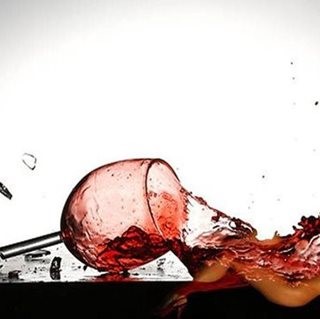
3. Champagne should be drunk out of flutes
The jury’s out on this one. In 2012, scientists from the University of Reims wrote that flutes were better than wide shallow coupes because higher levels of carbon dioxide collect at the top of the glass, giving rise to the tingling sensation that Champagne drinkers love. But have you considered using a large, big-bowled glass such as a Burgundy glass? It allows the beautiful aromatics to be savoured, enhancing the drinking pleasure.
4. Red wine causes more headaches than white wine
Contrary to popular belief, sulfites do not cause headaches, although they can cause an allergic reaction for some unlucky folk. Sulphur dioxide is a common preservative found in many foods, as well as in wine, and is naturally produced by the body. But red wines generally have less added sulfites than white wines. Any headaches are more likely caused by over-indulging and dehydration. Not sure how you’re going to broach this with diners who are convinced that red wine gives them a headache. Let sleeping dogs lie perhaps.
5. Red wine goes with meat; white with seafood
Not necessarily. It’s more important to look at a dish’s intensity of flavours and the sauce used. A tomato-based fish stew, for example, pairs more easily with a Spanish red like Tempranillo than it does with a white.
Big flavours require big wines; more restrained dishes call for more restrained wines. Although a bold red might not match a delicate piece of fish, meatier fish such as swordfish or tuna can work beautifully with a light red like Beaujolais while pan-fried salmon pairs nicely with Pinot Noir. Pork and veal match equally well with red or white, depending on the dish. Flavours, aromas and textures matter; colour doesn’t.
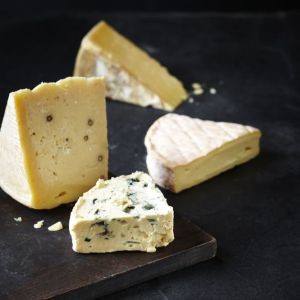
6. Cheese and wine is a perfect match
Some cheeses, such as creamy camembert, soft brie and other surface-ripened cheeses, coat the tongue and actually disguise the nuances of a good wine. Choose your cheese and wine match carefully. White, fortified and sparkling wines are often better matches for soft cheese than red wine. And just to be on the safe side, pop some dried fruit, nuts, bread or crackers on the cheese plate. They’re not just there to fill up the plate – they’ll cover up imperfections if the wine and cheese pairing isn’t quite right.
7. Only leftover white wine should be refrigerated
Refrigeration helps preserve wine as much for red as it does for white. Having said that, all wine should be consumed as soon as possible after it is opened.
8. Screw caps are an indication of lower quality
This is certainly no longer the case in Australia.
9. Wine is better with legs
The legs, or the streaks that run down the inside of the glass when you twirl it, are not an indicator of quality but rather of alcohol content. Because of the way that alcohol evaporates, wines that are higher in alcohol usually have slower dripping legs.
10. Small wineries make better wines
It’s a romantic notion so sorry to disillusion you, but bigger wine producers benefit from more resources (financial and otherwise), winemaking talent and economies of scale. It’s feasible for large companies to make boutique-style wines within the context of a mass-production facility. (Not that they all do; we’re talking about what they can do.) Yet people love the stories that go with family-run, boutique and heritage wineries, and diners are generally reluctant to order a wine that they can easily find at the bottle shop next door.
11 trends to consider for your wine list
Just as restaurant menus mirror, and even influence, people’s tastes, so too do wine lists present a snapshot of drinking trends.
Some of these trends are consumer-driven, others are led by sommeliers whose enthusiasm for particular styles has resonated with diners.
1. Going global
If there’s been one big change in wine lists over the last few decades, it’s in the number of imported wines. Sommeliers love them, and diners clearly do too. And it’s not just wines from well-known regions like Burgundy and Bordeaux. No, Australian drinkers are after something more obscure – Grüner Veltliner from Austria perhaps, or Txakoli from Spain. They want bragging rights at their next dinner party.
2. A love of bubbles
Along with this trend comes a passion for Champagne. Although sparkling wine sales have been flat for a few years, Champagne has had two successive years of double-digit growth, according to Nielsen figures.
3. Aussie pride
For an Aussie wine to get a look in, it helps if it’s made by a boutique producer or young gun winemaker. Creative young folk are shaking up the industry with their enthusiasm, talent and new approaches to winemaking.
The Next Generation Hunter Valley Project puts a cool spin on Hunter wine. In Rutherglen, young guns Eliza, Angela and Nicholas Brown show that a 150 year old winery, All Saints Estate, needn’t stand still.
4. Time for the underdog
Food-friendly but somewhat old-fashioned varieties like Grenache, Chenin Blanc and Gewurztraminer are nudging their way onto today’s wine lists.
Dowie Doole’s vibrant Chenin Blanc is complemented in special years by a Reserve called Tintookie, while The Little Wine Company’s delicately spicy Gewurz has been finely honed after several decades’ production.
5. Alternate grape varieties
Aussies are quick to embrace all things new, including wine varieties. Of the seemingly endless number of Italian, Spanish and other varieties, some – like Pinot Grigio and Sangiovese – have become almost mainstream.
Geoff Hardy offers a veritable feast with his KI, Pertaringa and Handcrafted by Geoff Hardy labels, with Montepulciano, Nero d’Avola, Teroldego, Primitivo, Graciano and others on offer.
Vermentino thrives in Sardinia so why not in our own warm climes? And winemakers have readily embraced Tempranillo, producing it in styles ranging from easy drinking quaffers to powerful and complex.
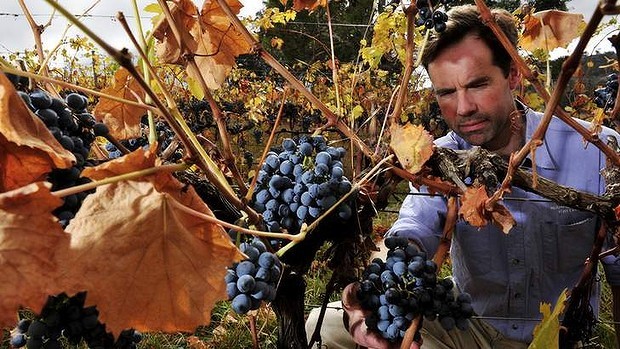
Frank van de Loo has helped put Tempranillo and Graciano on the map. Image: www.canberratimes.com.au
6. Brilliant blends
Mount Majura winemaker, Frank van de Loo, who has helped put Tempranillo and Graciano on the map, believes blends will be the next big trend.
For small wineries like Mount Majura, he says, “We’ve got to find what makes us stand out.” He’s pinning his hopes on TSG, an exciting blend of Tempranillo Shiraz Graciano, but is also working on a wild-fermented blend of Pinot Gris and Riesling. Something to rival Semillon Sauvignon Blanc, perhaps?
7. Clean and green
Just as many chefs are focusing on local, ethical and sustainable produce, so too are winemakers opting for clean and green – or should that be clean and red? Burke Reschke, who has one of the biggest privately owned vineyards in Coonawarra, refuses to use insecticides or sprays.
“My father died of cancer young and I would blame that on agricultural chemicals. I know a lot of those old chemicals are banned now but I don’t want any chemicals in my wine,” says Reschke, producer of the highly regarded Empyrean Cabernet.
Some winemakers are taking this a step further and seeking organic or biodynamic certification.
8. The wild one
Wild ferments are fun – for consumers, if not for winemakers.
All of Lark Hill’s wines are wild fermented from biodynamically grown grapes. Winemaker David Carpenter acknowledges it can be a challenge to rely on natural rather than added yeasts, but if a wine speaks truly of its place, then this is it.
9. Preservative-free
An extension of the craze for organic and/or biodynamic is an interest in preservative-free wines. This is tricky as preservatives counter oxidisation, but there’s a growing demand and winemakers are rising to the challenge. Battle of Bosworth, Rosnay and Lowe are names to look for.
10. Let’s get funky
Wild yeasts and minimal handling produce more authentic wines, but some wines are so “natural” they are positively funky. Trendy venues usually have at least one such wine listed, often with a symbol to differentiate it.
11. Leaner wine styles
Lighter, lower alcohol wines are also enjoying their moment in the sun. Styles such as Prosecco, Moscato, Pinot Grigio, Rosé and medium-bodied Shiraz are perfect for our warm climate and pair easily with food.
And the hottest trend of all? That would have to be restaurants that put as much thought and creativity into their wine list as the food menu; and if that’s not a trend, then it should be.