







Restaurant Performance Snapshot
Your restaurant operation is affected by many key elements which is call the Profit Triggers. These triggers impact your restaurant performance in a big way. In other words, these profit triggers contribute to your restaurant revenues, profits and related indices in a major way.
This blog post will look at four major categories of performance indicators for your restaurant operation which you must absolutely be on top of. A Restaurant Performance Snapshot format is also provided which you can download and customize for your needs.
The four major categories of performance indicators for your restaurant operation are:
- Performance
- Revenues and Profitability
- Statistics
- Forecasts
Performance
Performance is the first major category for your restaurant operation. It refers to how your restaurant fared compared to the market in which you compete or operate. It begins with knowing the revenue share of your restaurant versus the market. In short, this is knowing who your competition is.
the competition so important
If you operate in a particular competitive set, it is evident that decisions that you take on pricing, quality, presentation, products and services will impact not just your results but also that of the competitive set. So, knowing where you stand versus your competition is key.
Performance can be seen from the point of view of market segments of your restaurant outlets and the catering operation. Generically, the catering is the most profitable operation in the food and beverage business. Results can be tracked both from a revenue perspective as well as covers served which indicates volume.
Revenues and Profitability
Revenues are the foundation on which any restaurant (or for that matter any business) operation rests. Understanding your revenue behavior from the perspective of actuals, budgets, last year allow you to make comparisons of business results and indicating where you stand. Knowing whether you are growing or not in your revenues over time is critical to sustain the operation itself.
If revenues are the foundation of your restaurant operation, then profitability is the very reason for survival and earning a good return on investment for your owners. Profitability is what sustains the restaurant operation and injects vital cash flow to run the business.
It is often said in the hospitality industry that if there is no top line, there is no bottom line too. Owners are constantly looking for sustainable profits to continue running the restaurant operation.
In measuring profitability, knowing how your food costs, labor costs move is critical to know. These are the costs which actually dictate what profits you are able to retain from the revenues you have earned.
See below Restaurant Performance Snapshot for the elements of the performance category.
Statistics
While performance versus competition and revenues and profits are major categories,knowing the price and volume elements of related performance indices is critical.
Here is where knowing how much of your restaurant results is coming from the occupancy of the hotel (for a restaurant operation within a hotel), how much of your guest patronage is in-house and how much non-resident, knowing what your overall average check is are indicators that allow you to take decisions in the right direction in the pursuit of budgets and targets.
Most times, the direction in which the statistics are headed can clearly point to what is happening to actual revenues and profits. So, keep a sharp eye out for indications of drop in volume or growth from these elements.
See attached Restaurant Performance Snapshot for the elements of the performance category.
Forecasts
While the measurement of revenues and profits during the current month and year-to-date is important, however, depending upon the month of the year you are presently in,knowing the big picture for the entire year is crucial.
For example, if you are in the month of March 2015, knowing what happened to your performance during March and year-to-date for three months is important.
However, you must also know what your forecast for the entire year is indicating. In a way, you are using three months actuals and projecting nine months of forecasts which completes the picture for the full year performance.
Forecasts need to be measured, actioned upon and monitored both for revenues and profits.
See attached Restaurant Performance Snapshot for the elements of the performance category.
Conclusion
Your restaurant is a complex business operation. Keeping it on a path of revenue and profit growth is key to survival and competing in the environment you are in.
| Buffet Spreads – Bundling Food and Beverage Items for Higher Profits. |
| In any hotel food outlet and in particular when buffet spreads are offered, it is important to push beverage sales along with the food offering. Consider that a quality buffet offers you a soup, salad, entree, dessert and a drink all for a fair price. This strategy provides a balanced meal, enhances sales mix and revenues and boosts profitability. This is the Buffet spread philosophy. It is predominantly a sales mix matter. The principle of bundling more than one product is an age old marketing strategy. Take for example the ubiquitous McDonald’s Value Meal Bundle – Fries and Soda are offered along with the main food item for a value bundle price. This is to the benefit of the customer. For the vendor, It helps push sales of 3 products instead of one. A classic Win Win situation. In the case of hotel food and beverage items, there is similarly a silver lining. Selling four items (soup, salad, entree and dessert) instead of one has enormous benefits. Contribution margins are enhanced, service employees can be reduced with a buffet spread laid out and revenues are boosted. Moreover, beverage costs are much lower than food costs and tend to boost profitability through contribution margin. The buffet spreads in hotels are their version of the McDonald’s Value Meal bundle. You get a soup, salad, entree, dessert and a drink all for a fair bargain price compared to an a la carte order of these items individually. In this case, there is something that even the McDonald’s bundle cannot offer – unlimited consumption of food and beverage items.You can always keep going back to the buffet for more helpings. A unique Win Win situation again. |
Hottest Food and Beverage Trends in Restaurants and Hotel Dining for 2015
Three main threads work their way through consultants Baum+Whiteman’s 2015 Food & Beverage Forecast: (1) How technology is profoundly changing the way restaurants – at all price ranges – will work in the near future; (2) How basic flavors of food and drink are being manipulated by chefs’ and manufacturers’ mashups; and (3) Because of this, why despite what other pundits claim, ‘authenticity is no longer relevant.
Baum+Whiteman creates high-profile restaurants around the world for hotels, restaurant companies, museums and other consumer destinations.
Based in New York, their projects include the late Windows on the World and the magical Rainbow Room, and the world’s first food courts. Their annual hospitality predictions follow …
1. TECH IS THE TREND OF THE YEAR, AND NEXT YEAR, TOO
Forget cronuts and negronis. Forget quinoa and kale. Short of putting food into our mouths, technology is upending the way dining out works. Electronic wizardry once hummed quietly in the background … but now we’re immersed in “front-facing technology” or “guest-facing technology”: all sorts of devices and programs that interface directly with the consumer.
More restaurant companies experiment with tablets … letting guests order food and drink from their tables; play games while they’re waiting; then pay with smartphones … meeting a waiter when an order is delivered, or when it’s time for a refill from the bar, or for upselling desserts. Tables turn faster by eliminating downtime during which little happens and customers start fidgeting.
Even that’s not efficient enough: Skip the tablet and let people reserve a table and preorder dinner from a mobile device that also tracks how long it’ll take to get to a restaurant … and then clues the host and the kitchen to prepare for liftoff. Think of a chef’s joy in knowing that 20 minutes hence a party of six will want three ravioli orders (one gluten-free, one high-fiber), two orders of calamari (one fried, one grilled) and one plate of locally sourced root vegetables.
Got people standing five-deep at the bar? Why push through the crowd when you can order from your mobile (that’s the easy part) and location-based technology or face-recognition software can tell a waiter exactly where you’re standing (Big Brother’s always watching).
Two years ago we told you about McD’s kiosks in Madrid that allowed customers to order express meals without getting tangled at the counter … but that’s already from the dark ages. Pizza Hut is fiddling with touchscreens so guests can customize orders by dragging icons of various toppings onto their virtual pies … accelerating the entire dining process, cutting down errors, turning ordering into a game the entire family can play.
Meanwhile McD … and other burger-meisters … under competitive pressure from fast-causal upstarts, is testing apps for customizing hamburgers in real time … offering 22 premium options, never mind tanglefoot in the kitchen.
Convenience and speed are obvious benefits. But the real drivers are: (1) Millennials, who want to customize everything in sight; and (2) Galloping labor costs tied to health care and living-wage advocacy. And as labor gets too expensive (see “The Death of Tipping?” below), once-unaffordable technology starts making sense.
Coming: Amazing new uses for wearables like Google Glass. With face-recognition software, a server can know them names of everyone at a table … “nice to see you again Mr Jones; your usual Hendricks martini?” Hotel concierges can send you on a virtual gastro-tour rather than thumbing through dog-eared Zagat guides. And wait for the avalanche of data that will emerge from ApplePay and other electronic wallets.
2. PRE-PAYING FOR YOUR NON-CANCELLABLE DINNER
Restaurants with reservations backlogs are inching toward tech-enabled pay-for-tables systems … with people buying “tickets” for dinner like seats on an airplane. Often non-refundable. Restaurants get paid before dinner; even before buying food … enhancing cash flow and cutting out excessive inventory because they’ve always got a guaranteed house-count.
Even more: Using yield-management or revenue-maximizing software common in hotels and airlines, restaurateurs can introduce “surge pricing” … with menus varying by levels of demand. Would it be possible that the fellow sitting next to you paid only $34 for your $56 steak … because he reserved earlier? Did he get a booth while you got a miserable table because he cashed in some frequent diner points than you don’t have? Might restaurants auction off their seats to the highest bidders? Prep just six high-priced specials a night and auction them on their websites? Jes’ askin’.
The downside of this? Customers loathing restaurants the way they detest airlines.
3. OYSTERS R EVERYWHERE
We’ve rediscovered oysters. They’re cheap because bays, inlets and tidal basins are being detoxed … so farmers are reseeding old oyster beds and discovering new ones. Not a few here and there, but dozens around the country.
Chips and pretzels are disappearing as happy hours on the coasts keep booze flowing with dollar-apiece oysters … sometimes happy hour lasts all day.
Mixologists and sommeliers scramble for steely white wines and new cocktails to match the bivalves. Locavores and farm-to-table niks love the notion of plucking these critters from nearby waters … while sophisticates guess by brine, acidity and shape where an oyster’s from, giving rise to the term “merroir” as a parallel to wine-related “terroir.” (There’s even a shellfish place in Virginia called Merroir, which must be hell to pronounce down there.) At Waterbar in San Fran, oyster descriptors include: tropical fruit finish; clean lettuce finish; touch of bitter herb; honeydew melon, and sweet grass.
Traditionalists stick to cocktails sauces … but for modernizing upstarts the world is their oyster and they’re provoking palates of the young and moneyed. We’ve seen oysters with lemongrass cocktail sauce or yuzu koshu dressing; The Girl & The Goat in Chicago has a muscatel mignonette with tarragon. Eventide in Portland ME assaults it oysters with kimchee or horseradish granita. Marshall Store & Oyster Bar in Marshall CA cooks its oysters with chorizo butter. For five bucks, Island Creek Oyster Bar in Boston lets you add fried oysters and horseradish mayonnaise to burgers, steaks and roast chicken.
Need numbers? Chesapeake Bay’s harvest grew eightfold between 2006 and 2012; in Connecticut the harvest about doubled between 2007 and 2010 and is still growing.
Trending: Tiny kusshi oysters from British Columbia. Absinthe cocktails to go with shellfish. Danger: Global warming.
4. OUR RESTLESS PALATE SYNDROME
Can’t let well-enough alone. New flavors, new products, radical mashups pour out of restaurants and food labs … and “authenticity” goes out the window. Here’s how we’re feeding the country’s restless palate syndrome:
Beyond kale: Ugly root vegetables. Celery root, parsnips and kohlrabi are grabbing attention in restaurant kitchens … fried, mashed, pureed, gratineed; flavored with cured pork or smoked honey … humble themselves, they replace humble potatoes with lotsmore inherent flavor. Better yet, consumers have no notion of how to cook them … so they’re becoming cheffy ingredients.
Seaweed Beyond Sushi: Seaweed may not be the next kale but it’s on the upslope of the trendline. Consumers recognize it as a packaged snack and as a California roll’s wrapper.
But chefs are adding it (often silently) to poaching broths, seafood sauces, even risotto, for its punch of umami and evanescent background flavor and dash of salinity. They’re inspired by a sustainable sea-to-table ethos … and also by new-Nordic cooks searching for food under tree stumps and boulders. More than a dozen varieties tickle the fancy of locavore chefs.
Beyond Sriracha: Look for lots more sweet-spicy sauces and condiments. Chefs and big restaurant chains are experimenting with piquant honey: habanero honey, jalapeno honey and ghost chili honey, ginger-citrus honey … going on chicken-and-waffles, whipped into butter, mixed into salad dressings, snuck into sauces. Same thing with jams and jellies. Revered Paulie Gee’s in Brooklyn spreads its already hot sopressata pizza with chili honey, getting lots of press for its efforts.
Beyond Sweetened Yogurt: Health-crazed consumers gorge on fruit-flavored, yogurt … not knowing they’re buying candy-level calories. Now comes vegetable yogurt … pioneered by ultra-green restaurant Blue Hill at Stone Barns where, with a mountain of Rockefeller money, they can experiment endlessly. After launching flavors such as butternut squash, beet, carrot, and tomato, the Barber brothers, Dan and David, are being scrutinized by big yogurt manufacturers.
A yogurt bar in Murray’s Cheese store in New York offers tomato yogurt and kimchee yogurt. Chobani, the biz’s big gorilla, has a cafe in SoHo … offering yogurt topped with hummus (see below), chickpeas, zaatar and olive oil; with spinach and garlic dip; and cucumber, olive oil and mint leaves. Such combos are standard in the Middle East; in the US this is a New York phenom since most of the country’s thickened yogurt is made there … but it’ll spread.
Meanwhile in Japan Haagen-Dazs has two vegetable ice creams … tomato-cherry and carrot orange.
In Rome you now find artisanal gelati made with gorgonzola, with mortadella and pistachio, with artichokes, even with anchovies and smoked salmon. One gelateria serves these with beer pairings.
Beyond Salsa: Hummus without Borders You’ve watched the rise of Greek yogurt, yes? Now hummus … once a niche product here eaten primarily by Arab and Israeli immigrants … is following the same trajectory. Google says that hummus has out-trended salsa, no small thing since salsa dethroned ketchup. The chick pea dip has become so Americanized … which means piled with flavorings … that the Subway is testing it as a no-meat option for its sandwiches.
Hummus is high in protein and fiber and low in fat, so it touches lots of dietary bases. Eight years ago perhaps 12% of US households had it in the fridge; today 20% and rising … largely because the Sabra brand (co-owned by Pepsi) did enormous missionary work, even running a popup store in Georgetown. Upscale supermarkets display two dozen variations … beet, pumpkin, Thai chili, spinach-artichoke, guacamole, edamame, cilantro-chimichurri, lemongrass-chili … even (oh, dear) chocolate mousse.
Ottolenghi makes one with lentils, and food provocateur Rozanne Gold’s is made with white beans and roasted sesame tahini topped with an Asian mix of roasted sesame seeds, seaweed and shiso. Mexican-inflected hummus is on the way and there’s no reason not to create teriyaki chicken or curried cauliflower hummus. Another example of why “authenticity” is on the downslope.
Beyond Bacon: After despoiling ice cream sundaes and whisky cocktails with bacon, the bizarre fixation on everything-bacon seems to have abated (except for triumphant Slater’s 50/50 burger — better look that up). But not for all things pork, though. More guanciale, more pancetta, more fried ears, more cheeks … and then there’s ‘ndjua (not a typo), a light-up-your-mouth spreadable sausage from Calabria made, originally, from unmentionable parts of the pigs … now finding its way onto pasta, melting over pork chops, spiking mushrooms over focaccia, even blended into vinaigrettes as sauces for fish. If bold flavors are a trend, this eye-stinging, red-peppered mushy salami is next year’s bold flavor.
Beyond Beer: Cocktails with beer are finding favor in trendy bars. But watch out for Micheladas … or cerveza preparada … a beer-based drink enlivened with a bevy of sauces and spices. Originally Mexico where they began adding hot sauce to beer, Micheladas now are a focus of elaboration. You can douse your beer with bloody mary spices or with clamato juice and soy sauce, or practically anything else.
At the new Empellon al Pastor in New York, there are chef-driven micheladas … with corn powder, malta Goya and ponzu concocted by Wylie Dufresne, and Chambovaca by Andrew Zimmern, erupting with chipotle tomato juice, beef broth and tequila.
Beyond Beyond: Explore Japanese snack foods; they’re so flavor-crazy that what sticks there might make it here.
Shrimp-and-Mayonnaise or Avocado-Cheese Doritos; Lay’s Hot & Sour Fish Soup Potato Chips; KFC’s salty ginger-chicken chips; Pepsi-flavored Cheetos. Someone’s making anchovy-garlic chips … which gets you halfway to Caesar salad. Kirin is selling Salt & Fruit beverages, a combination of rock salt and fruit juices. ( Korea, too. Left, KFC’s bunless Doubledown: burger, bacon, cheese, two pieces of fried chicken).
The principal is clear: There’s a restless palate syndrome affecting young people … millennials especially.
And One Dishonorable Mention … Toast Should Be Toast: Free us from $4-and-up slices of “artisan toast!”
For example … “hand-crafted 12-grain bread sliced to order and bronzed over an oak fire, then spread with organic beach plum jelly harvested by genuine hipsters and topped with pink Himalayan sea salt ground a la minute” … despite all those words it still is just toast and jelly.
Toast used to come with your eggs and cost … nothing. Now toast claims it own space on menus of coffee houses, cafes and bruncherias.
5. BIG SHIFTS IN BOOZING
Sharable punches: Your parents’ preference for communal boozing is back. Now liberated mixologists in fancy places are concocting large-format punches that serve from multitudes of guests … with no limits on pricing or ingredients.
Herbal Liqueurs: Mysterious ancient blends of botanicals … flowers, spices, citrus peels, herbs, tree barks … are new again to new generations of drinkers. What once were stand-alone before or after dinner drinks … chartreuse, maraschino, Benedictine, and, especially, absinthe … are now adding body and depth to inventive cocktails. Amari, those bitter medicinal liqueurs from Italy … Fernet Branca, Averna, CioCiaro, liquoricey Ramazzotti, Cynar, Punt e Mes and various red vermouths … are filling bartenders’ shelves.
All giving rise to multiplying variations on the classic Negroni. Clyde Common in Portland has them barrel aged. Jasper’s Corner in San Fran (left) has them on tap. Ultra-upscale Lincoln Ristoranti in New York lets you mix-and-match Negronis from among 18 head-spinning spirits, bitters and vermouths. New G&T variations include tonic plus bitters for added flavor.
Whackadoodle Hybrids: Spirits manufacturers … pandering to millennials and women … accelerate sweetening name-brand brown whiskies with honey or maple syrup or flavoring them with cinnamon, apples, ginger, vanilla, cherries, even pumpkin pie spices (inspired, one guesses, by Starbucks’ PSL). They’re also trying to lure drinkers away from flavored vodkas, which are hitting a wall of boredom these days. About 40% of all spirits here have added flavorings. Equally deviant are shotgun marriages like Malibu Red (rum-tequila), Vodquila (vodka-tequila), Grey Goose’s VX (vodka-cognac), Jinzu (gin-sake), Courvoisier Rose (rosé wine-cognac), Kahlua Midnight (Kahlua-rum), and Absolut Tune (Sauvignon Blanc-vodka-carbonation in a champagne bottle). These mashups are evidence that the case for”authenticity” in the world of F&B continues weakening year after year. In France, flavored wines … peach, grapefruit, even Coke … are popular with 18- 34-year-olds, which means the world may indeed be coming to an end.
Soda Fountain Crashes the Bar: Diet-be-damned adults are splashing booze into ice cream favorites. Belmont House of Smoke in Norfolk is semi-famous for its Guinness Float. Punch Bowl Social in Denver features Milk-Xologist (coffee liqueur, branca menta, vanilla ice cream, nutmeg); a new 300-seat diner in New York will have a slew of “adult shakes”; Del Frisco in Atlanta offers walnut liqueur, creme de cacao and vanilla ice cream; Red Robin recently unleashed a bevy of shakes spiked with the likes of Blue Moon, Irish Cream, and a beer shake with stout and Irish whiskey. On a health food kick? Freestyle Cuisine in Lake Placid will sell you a shake blending avocado, vanilla ice cream, tequila and fresh lime.
Vodka Cedes the Throne: Brown whiskey at long last outstripped vodka in sales dollars. Bourbon, rye, blends and Scotch are enjoying a renaissance because drinkers want more body. No one really believes vodka is “crafted” … but an explosion in local distilleries around the country specializing in small-batch whiskies is riding trends regarding natural, local and authentic … sort of a grain-to-bottle movement. Besides, bourbon and rye are traditional American boozes, and they’re more distinctive with lots of variation from brand to brand. And there’s the ruboff from wine culture … these products get better (or at least more costly) with barrel age. Much of the growth is at the luxury end — Pappy Van Winkle, Woodford Reserve, Bulleit’s rye and bourbon, for example.
Next-gen coffee shops
Pressured by rising real estate, by Starbuck’s relentless evolution, and by Dunkin Donuts fixation on its beverage business, coffee shops will rethink their business models; they’ve got to fill in downtimes … meaning most of the day. They can’t rely on ‘cinos, forty variations of pumpkin spices and soy milk lattes.Beer and wine sometimes helps … but then you need the proper go-withs, so along come limited menus that often don’t augment the alcohol experience.
Artisan sodas; cold-pressed juices; boozy juice-based cocktails; patisserie-quality desserts; salads; shakeratos with tea and coffee in infinite flavors; cold brewed coffee and pourover coffee; ultra-local craft beer; even live entertainment if space is available. The coffee business is moving from the “third place” to maybe a “fourth place.”
The future of juicing:
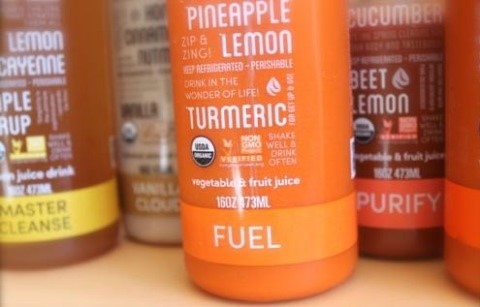
So competition’s getting fierce. Hotels are adding lifestyle juice bars with good-for-you vegetables (kale, beets, celery, peppers, spinach and other greenery you don’t normally encounter at breakfast) made palatable by sweet doses of OJ, honey or agave (you make lots of money selling them for four or five bucks more than orange juice, and even more with at happy hour with a shot of vodka or rum). Frozen yogurt chains are adding juices … as are upscale supermarkets. You find juice bars in airports and in bicycle stores. And juice bars are sprouting menus (see Next-gen coffee shops, above). What began as a vitamin-rich way to clear your intestines has become the new darling of IPO-fixated franchisors … perhaps too many of them.
7. CHEFS ABANDONING FOUR-STAR DINING?
Chefs and restaurateurs are rethinking backbreaking, high-risk commitments to multi-star dining as customers in droves pledge allegiance to the fast-casualization of America. Why worry about critics and bloggers when, like Danny Meyer, you can strike gold with an IPO (pending) for 56-unit-and-growing Shake Shack?
Ditch the flowers, linens, reservation systems, truffles, expensive china, and no-shows … and instead feed masses of people with less risk. It’s not curtains for ultra-fine dining (it never is, despite doom-sayers), but look at who’s aiming to be the next Chipotle: Jose Andres is opening Beefsteak (after the tomato), a veggie-focused fastcas place in Washington.
Old and new challenges in seafood safety
Fishery and aquaculture have been increasing in already exploited parts of the sea, as well as new areas, following the strong demand of food on global and regional scales. The possible contamination of fishery products due to toxins of microalgal origin is a matter of concern for fishery and aquaculture worldwide, and food safety has been a major drive for the development and implementation of procedures to protect consumers. The advancements of knowledge on toxic microalgae and microalgal toxins have played a fundamental role for developments in the last 10 years. Increasing awareness regarding the complexity of issues to be approached in this field has been providing better theoretical and operational tools for future progress in the risk assessment and management of both ‘old’ and ‘novel’ toxins; helping the fishery and aquaculture sectors to meet consumers’ expectations for safe food.
The increasing demand of food on global and regional scales is keeping the attention of stakeholders on already exploited parts of the sea, as well as new areas, including freshwater. The increasing fishery and aquaculture exploitation has emphasised the many issues linked to human and environmental health, and particularly food safety. The possible contamination of fishery products due to toxins of microalgal origin is one such issue, and has been a major drive for the development and implementation of effective procedures to manage the risks posed by the natural products responsible for human and animal intoxications.
Organic Coffee Roasters: Ensuring Safe Coffee
As organic coffee has become mainstream over the past several years, it is important to consider the roles of growing, certifying, producing and processing organic coffee and how these processes affect beverage safety.
The following article discusses these processes and shares the case studies of two organic coffee roasters, specifically, how they maintain strict standards for supplying safe, quality organically certified coffee to consumers.
Organic Standards
Organic coffee production has a strict set of government standards unlike any other certification standard. In the U.S., these are established by the National Organic Program (NOP) of the U.S. Department of Agriculture (USDA) as it relates to agricultural crop production and must be able to verify that organic integrity is maintained throughout the process. This results in strong, traceable production and processing practices, providing consumers with the assurance that the organic coffee they are drinking is produced in a manner they can trust.
Organic Growing and Production Principles
Soil Management: Before any planting can occur, the land may not have had any prohibited substances applied for at least 3 years. Whether the land had been previously cultivated, organically or conventionally, or is a newly cultivated plot, the accredited certifying agency (ACA) must be able to verify the 3-year absence of prohibited materials.
Growers seeking certification must be able to show distinct boundaries between adjacent non-certified land, with buffer zones in place to prevent unintentional drift of pesticides and fertilizers applied by surrounding growers. Buffer zones are especially important in split operations, where a grower may only have a portion of the plantation certified organic while the remaining portion is managed conventionally.
Organic System Plan: Once the land is deemed certifiable by the ACA, growers must develop and maintain a plan, which is agreed upon and approved by the certifier. The plan must include written descriptions of practices and procedures that will be adhered to and monitored continuously to ensure organic integrity is not compromised during any aspect of production or handling. All fertility and pesticide inputs must be approved by the ACA, and it is the responsibility of the grower to document the use of all inputs.
Subpart C of the NOP rule includes the production and handling requirements for all operations. Here are standards related to soil fertility and nutrient management. Additionally, standards are in place for seeds and planting stock, crop rotation and cover crops and pest, weed and disease management. Growers must implement tillage and cultivation practices that will maintain or improve the natural resources of the operation. As crop rotation is not a feasible option in coffee production, growers will plant permanent sod cover between rows to promote biological habitat, improve soil organic matter and, most importantly, help prevent erosion.
When cultivation practices are not sufficient for the nutrient needs of the plantation, growers have several options. While composted plant and animal materials are allowed, NOP has also set forth specific standards on synthetic and non-synthetic fertility inputs for general crop production. Sections 205.600-205.606 of NOP is the National List of Allowed and Prohibited Substances, which is broken down into allowed and prohibited substances for crop production, livestock production and processing.
Pest Management: When it comes to pest, weed and disease prevention, the standards are similar to those in place for fertility management. Pests may be controlled through cultivation and sanitation practices along with mechanical traps and lures. Biological methods such as the introduction of predators and parasites and development of habitat for natural enemies of the pest are also allowed and encouraged. When these methods are not effective and a suitable non-synthetic substance is not available, growers may consult the National List for allowed synthetic substances.
Any material input intended for fertility, pest control or disease prevention used on the plantation must be reviewed and approved by the ACA, be listed on the National List of allowed non-organic substances or have been approved by an acceptable materials review program approved by the USDA. Inputs must be monitored for compliance during all stages of production, from pre-planting through harvest and storage.
Organic Processing Principles
Unlike most other coffee certifications, the verification process does not stop at harvest. All coffee berries must be harvested and handled in accordance with NOP standards. Growers must develop procedures to ensure only coffee from certified plantations or the certified section of split operations is harvested. This is where it becomes critical that plantation boundaries are clearly identified. Field maps help ACAs and inspectors easily identify organic boundaries and plantings.
As most coffee is harvested by hand, plantation managers must ensure that any container or bag used during harvest has not previously contained or been treated with prohibited substances. To eliminate the potential for contamination, virgin or dedicated bags and bins should be used. If any of these previously contained non-organic material, an adequate cleaning step is necessary to remove the non-organic material or residue that may be present. Often color-coded, these bags or bins must be identifiable as containing organic coffee in storage and during post-harvest activities. Following harvest, the coffee berries go through several processing steps before being ready for export. These post-harvest activities must be included in the grower’s organic plan or, if carried out off-site, must be done at a certified facility. A processing plan must be agreed upon and approved by the ACA to ensure that all actions are compliant with NOP standards. For example, the plan must include a description of practices that will keep organic product segregated from conventional. All equipment, containers, and contact surfaces used in organic coffee processing must be free from contaminants coming from sanitizers and chemical pesticides as well as any remaining residue from non-organic products.
In addition, procedures must be in place to maintain water and soil quality. As the pulping and de-husking process produces a large amount of solid waste and uses a vast quantity of water, procedures to manage this waste must be in place. Solid waste in the form plant residue may be incorporated back into the plantation as compost and must be kept from entering streams and rivers. Additionally, there need to be methods for recycling water used for processing.
Bagging: Following the completion of post-harvest processing, the green coffee beans are bagged and exported. If the bagging occurs off-site, handling must take place at an organic-certified facility. If this handling operation handles conventional coffee as well, an approved plan must be in place to prevent commingling of organic and conventional coffee. Equipment must be cleaned to ensure removal of non-organic residue. Depending on the sanitizer used, a rinse step with water may be required to prevent contamination by sanitizer residue. Sanitizers allowed without a rinse are listed on the National List, section 205.605. All bags must also be clearly identified as organic.
Export: Once ready for export, bagged coffee is shipped in cleaned or organic-dedicated containers to either a storage facility or directly to the roaster. For the finished product to be labeled as organic, it must be roasted at an organic-certified facility, unless the roaster is exempt from the requirements of certification (i.e., <$5,000 annual sales in organic products). The roaster must protect the organic integrity of the certified coffee from the moment it receives and stores green beans through the roasting and retail packing process. As most roasters handle both organic and conventional beans, it is critical to prevent contamination and commingling during this final step.
If the operation does not have a dedicated roaster or grinder for organic beans, it must implement measures to remove all non-organic residues from equipment. This is most effectively done by conducting a purge or flush with organic beans in which a pre-determined amount of organic beans is run through the roaster and/or grinder to flush out all residues that could not be removed through physical cleaning. The amount used for flushing the system must be agreed upon by the ACA and the operator. The beans used for this flush must be disposed of or sold as non-organic as they would not be eligible for organic representation. The beans following the flush will be deemed organic compliant.
Organic integrity and prevention of contamination and commingling are the basis for many of the requirements in coffee production. However, no rules or laws can strengthen the organic integrity more than the commitment of the operations to follow the production standards with care and honesty.
Food Safety Systems for Low-Acid Aseptic Beverages
Hazard Analysis and Critical Control Points (HACCP) is a science-based system that identifies, evaluates and controls hazards of significance to assure food safety. Simply put, the focus of Hazard Analysis is that hazards and appropriate control measures are identified and Critical Control Points (CCPs) are further delineated as control measures essential to eliminate or reduce the hazard to an acceptable level. The boundaries that separate acceptability from unacceptability are defined as critical limits.
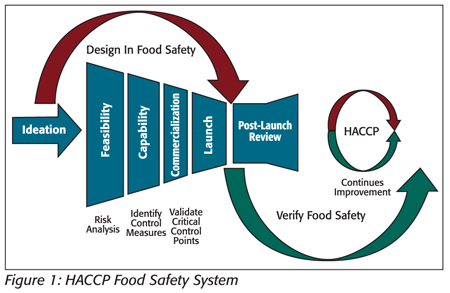
Where manufacturing processes and control measure components have been predefined in product and process design, the application of HACCP can be a reflective process for the facility HACCP team as they evaluate each control measure in determining “What hazard is of significance and is the step specifically designed to eliminate or reduce the likely occurrence of a hazard to an acceptable level?” (see Figure 1).
Aseptic processing and packaging refer to the processing and packaging of a commercially sterile product into sterilized containers followed by hermetically sealing with a sterilized closure to prevent viable microbiological recontamination.
Hazard Analysis and Control Measures
For low-acid (pH > 4.6), shelf-stable, no refrigerated beverages, heat-resistant spores of toxigenic anaerobic microorganisms, such as Clostridium botulinum, are a biological hazard of significance that warrant absolute control. Food borne botulism can be severe, resulting from the ingestion of foods containing the neurotoxin formed during growth of the organism if present and allowed to grow in the product. Thus, the primary strategies in minimizing C. botulinum risk are in having effective control measures for (i) sterilization and maintaining sterility of the processing equipment; (ii) destruction of heat-stable C. botulinum spores in product; (iii) sterilization of the packaging material and (iv) maintaining sterility during filling and packaging.
For HACCP, the components of these essential control measures can be defined as CCPs. For a regulated scheduled process, these control measures can be described as critical factors.
A critical factor is defined by the U.S. Food and Drug Administration (in 21 CFR 113.3) as any property, characteristic, condition, aspect or other parameter, a variation of which may affect the scheduled process and the attainment of commercial sterility.[1] The ‘scheduled process” means the process selected by the processor as adequate under the conditions of manufacture for a given product to achieve commercial sterility.
This article provides some HACCP examples of control measures in which critical components and limits have been predefined in the design of a process to ensure commercial sterility for low-acid beverages.
Equipment Sterilization
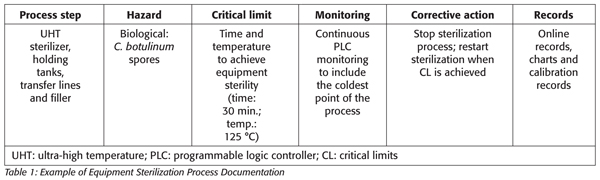
Sterilization is a process aimed at the complete destruction of microorganisms and their spores. Before production start-ups, all components of the process equipment downstream from the sterilizer hold tube must be brought to a condition of commercial sterility and maintained during production to ensure commercial sterility. Typically, the equipment components would include an ultra-high temperature (UHT) sterilizer, all holding tanks and lines after the UHT sterilizer and the filler. For each of the components, Hazard Analysis and control measure evaluations by the HACCP team should take into consideration the time and temperature required for the coldest part of the process to meet sterilization parameters and that calibrated monitoring equipment is located appropriately to indicate desired performance. A common industry guideline is using the performance criteria of time and temperature to achieve inactivation of bacteria and bacteria spores (i.e., >121 °C for 30 min.).
The process authority may indicate additional critical factors to the equipment manufacturer for the process. A process authority is a competent person having expert knowledge of aseptic processing and packaging for making determinations of a scheduled process.
Corrective actions, when the sterilization temperature and time fail to reach the critical limit, are controlled by the equipment through automatic stoppage (Table 1). The sterilization program should be reset and the machine restarted. Checking the temperature monitoring devices prior to start-up will verify that the system is functioning; however, this should not be considered as a validation that is required during the process commercialization.
Product Sterilization
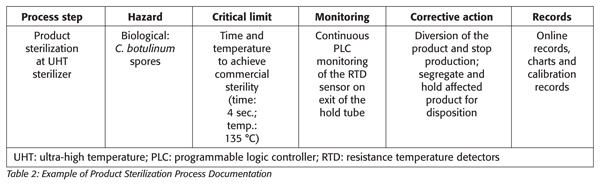
The process authority, in conjunction with the equipment manufacturer, defines the scheduled process, taking into consideration critical parameters, such as incoming spore load, product formula, pH, rheology, heat penetration, flow rate, residence time and equipment surface contact area.[2] The typical acceptability for the process is often defined by a multiple of 12 for the D value (i.e., the time required at a certain temperature to kill 90 percent of the organism) of C. botulinum, or its equivalent. To compare thermal processes calculated for different temperatures, a standard Fo value is assigned for each product. This Fo value is the time in minutes (at a reference temperature of 250 °F and with a z = 18 °F) to provide the appropriate spore inactivation to achieve commercial sterility. The sterilization parameters are usually both product and process specific.
In a continuous product flow process, the time for which the product must be held at the defined temperature to attain sterility is achieved in the section of the hold tube. The flow rate of each particle of the hold tube is critical. It is essential that the rate of flow for the fastest particle or the shortest particle retention time be accurately determined for each product flow rate, length, dimension and design of the hold section and product type and characteristics. The use of dye or salt injection can be employed to determine minimum residence time. Mathematical models that incorporate the flow rate, product rheology and the dimensions and design of the hold tube are used to calculate the minimum residence time required to achieve product sterility. For situations in which flow characteristics are unknown, experimental design studies may be used to validate the thermal process.
Corrective actions, when the sterilization temperature and time fails to reach the critical limit, automatically divert the product for reprocessing or destruction (Table 2).
Packaging Sterilization
The objective of packaging sterilization is the same as for equipment sterilization: the destruction of bacteria and spores on packaging surfaces to ensure commercial sterility for cold filling and packaging of the product. The packaging material, preformed containers and their closures are usually sterilized inside the packaging machine or externally and introduced aseptically into the aseptic zone of the packaging machine. For sterilization inside the packaging machine, it is usually accomplished by heat or through a combination of chemical and physical treatments.[3]
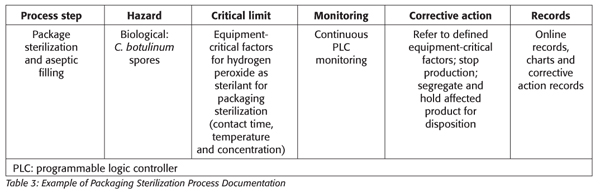
In the example of using hydrogen peroxide for packaging sterilization, most of the validation and performance acceptance levels are conducted by the manufacturer, leaving the final validation to be conducted by the commercialization facility and verified by the HACCP team (e.g., using Bacillus subtilis for modeling temperature and time requirements for equipment and packaging sterilization). The critical factors, defined by the equipment manufacturers, may include sterilant concentration, mode of application, temperature, contact time and packaging contact surface size with acceptance criteria of 4–5 log reduction for spores. Additionally, there may be other regulatory limits such as the minimum concentration of 30% with residual hydrogen peroxide regulated at a maximum level of 0.5 ppm.
Corrective actions for the packaging and filling operations of these complex systems are often predefined by the equipment manufacturer and the process authority (Table 3).
In addition to the above equipment and process steps, the HACCP team should conduct Hazard Analysis and evaluate control measures that are essential to maintaining process sterility. The evaluation should include components such as steam barriers, overpressure and associated HEPA filtration systems.
Verification
The facility HACCP team, during the HACCP reviews, verifies the critical limits that control the specific hazards and ensure product safety. The verification process may be performed by an individual who is qualified in the particular field and is not responsible for the routine monitoring of the critical limits. One such example is verification of the reliability of the results through calibrations being performed to acceptable international standards by an independent third party, thus showing that measuring devices are accurate and precise.
Measurement of critical limits in each of the components of the scheduled process can be verified independently, for example, divert checks performed on the UHT sterilizer at the start-up of production to show that product that has undergone insufficient temperature treatment will be diverted away from filling. Another effective method for verifying the effectiveness of product sterilization is through media fill trials, where a microbiologically sensitive medium, such as Linden Grain, is sterilized, aseptically filled into sterile packs and plated for total viable count, yeast and mold. The microbial content of the media-filled packs must show an absence of growth.
Conditions required for the sterilization of filling machines can be verified by placing Bacillus stearothermophilus spore strips of known spore loads in target locations and measuring the log reduction following equipment sterilization.
Alarms on filling machines with a hydrogen peroxide immersion system can be tested to show they sound when the hydrogen peroxide bath level is below a minimum volume. A more quantitative method for verifying the effectiveness of packaging sterilization is by inoculation pack testing, where preformed packaging is inoculated with a known amount of bacterial spores and introduced into the packaging machine where it is sterilized. The packaging then undergoes microbiological testing to determine the log reduction post-sterilization. Results from package integrity testing where filled packs are inspected for leakages or incorrect sealing can also verify that the product has been hermetically sealed at the filler. Record keeping is an important part of the verification process, as it serves as documented evidence that critical limits have been reviewed and verified to be fully functional at maintaining aseptic control.
8 Ways to Upgrade Your Gin and Tonic (Colour)

There’s nothing simpler than a classic gin and tonic. But the old-school cocktail can be made fizzier, boozier and more intense. Mad geniusDave Arnold reinvented the G&T with high-tech equipment, but there are easier ways to do it at home. Here, eight ways to dress up and remake one of the world’s greatest drinks.
1. DIY tonic water. If commercially produced tonic waters are too sweet for you,make your own tonic syrup, then mix it with club soda.
Learn about the New AMEX Everyday Card
2. Add herbs. Chopped tarragon makes the aromatic cocktail even more deliciously herbaceous.
3. Do honeydew. Muddled honeydew is the perfect addition to a gin and tonic made with rose-and-cucumber-infused Henrick’s gin.
4. Add grapefruit. Tart pink grapefruit juice and a couple of dashes of Peychaud’s bitters transform the gin and tonic into a terrific cooler.
5. Make it boozier. Adding Cynar, a bitter artichoke liqueur, accentuates tonic water’s natural, mouthwatering bitterness. Use a citrusy gin like Tanqueray No. Ten.
6. Spa it up. Take some inspiration from the refreshing waters served at spas and addmuddled cucumber and fresh mint. It’s ultra-refreshing.
7. Freeze it. Follow this recipe to make a gin and tonic sorbet. It’s the ultimate gin-lover’s dessert.
8. Add even more lime. In Mexico, bartenders add fresh lime juice to gin and tonics instead of simply garnishing the cocktail with a lime slice.
7 Ways to Use Summer Fruit for Labor Day Cocktails (Colour)
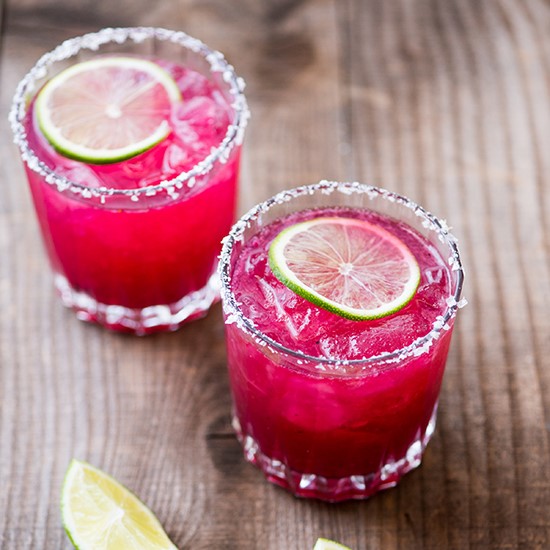
Now is the time to make these seven refreshing cocktails with ripe peaches, watermelon and strawberries.
1. Blueberry Margarita
Muddled blueberries star in this quick and easy cocktail.
2. Strawberry-Lemon Mojitos
Try a molasses-based rum for a smoother drink, or a sugarcane-based rum for a drier cocktail.
3. Blackberry and Cabernet Caipirinha
This punch-like take on the caipirinha features a Cabernet blended with spicy Syrah.
4. Mango-Peach Sangria
John Besh recommends Viognier, a fruity white wine, for this summery sangria.
5. Sour-Cherry Gin Slings
How do you upgrade the classic Singapore sling? Replace the traditional cherry brandy with a vibrant, homemade sour-cherry syrup.
6. Watermelon-Tequila Cocktails
Bobby Flay mixes silver tequila with pureed watermelon and fresh blueberries.
7. Sunburst
Kiwi adds both sweet and sour flavors and terrific texture to this excellent cooler.